Optics and Microfluidics Instrumentation (OMI) Lab
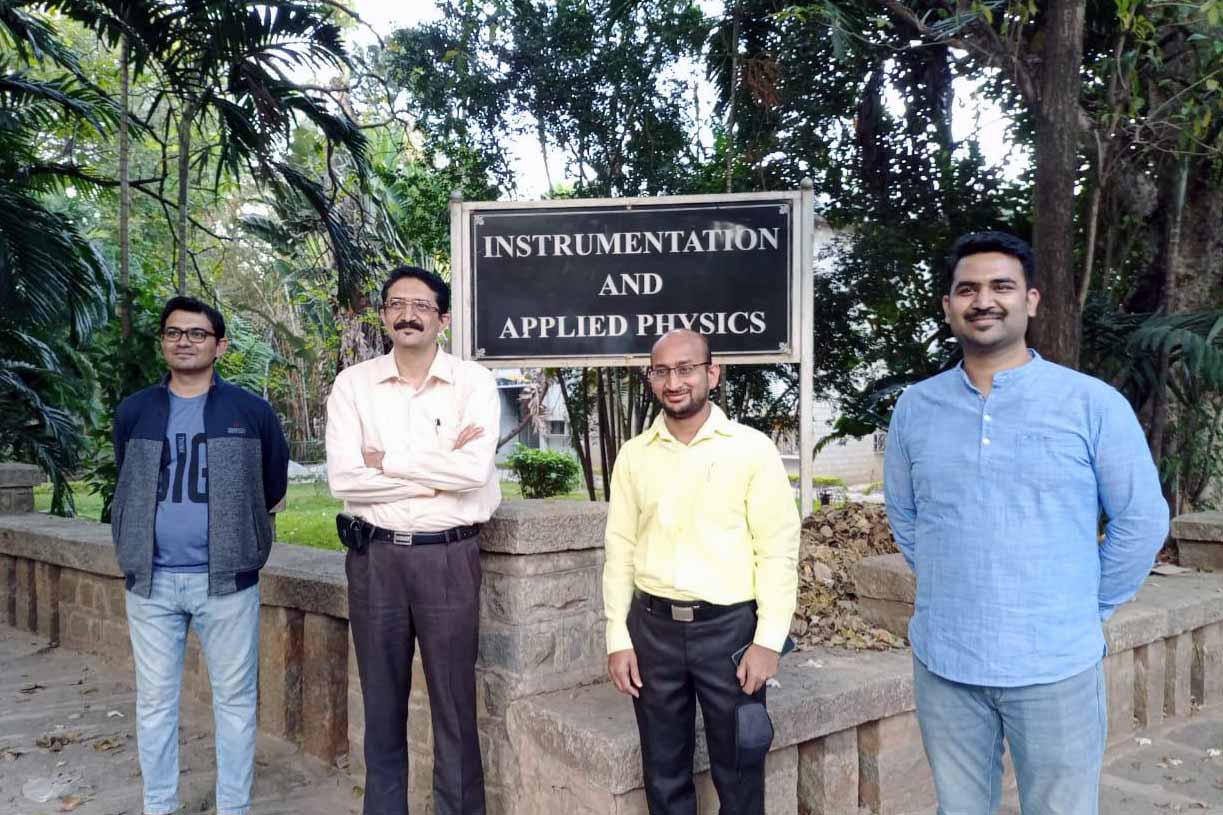
Department of Instrumentation and Applied PhysicsIndian Institute of Science (IISc)

Point-of-Care Test for Sickle Cell Anaemia
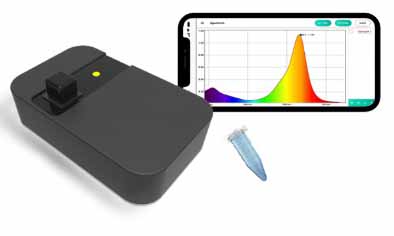
A low-cost, portable diagnostic kit developed by researchers at the Indian Institute of Science (IISc) can detect both Sickle Cell Trait (SCT) and Disease (SCD) using light absorption differences in blood samples. The test, which delivers results within 15 minutes, requires minimal equipment and is ideally suited for rural and resource-limited settings.
Validated on 438 patient samples, the kit achieved an impressive 96.9% sensitivity and 98.6% specificity. The project was developed in collaboration with Dr. Nisanth Nambisson, a clinician based in Bhopal. The core principle is based on absorbance spectroscopy, and the data is analyzed through a machine learning-based classification algorithm. The HPOS kit utilizes low-cost reagents and a portable spectrometer, making it an affordable and scalable alternative to conventional High-Performance Liquid Chromatography (HPLC) tests.
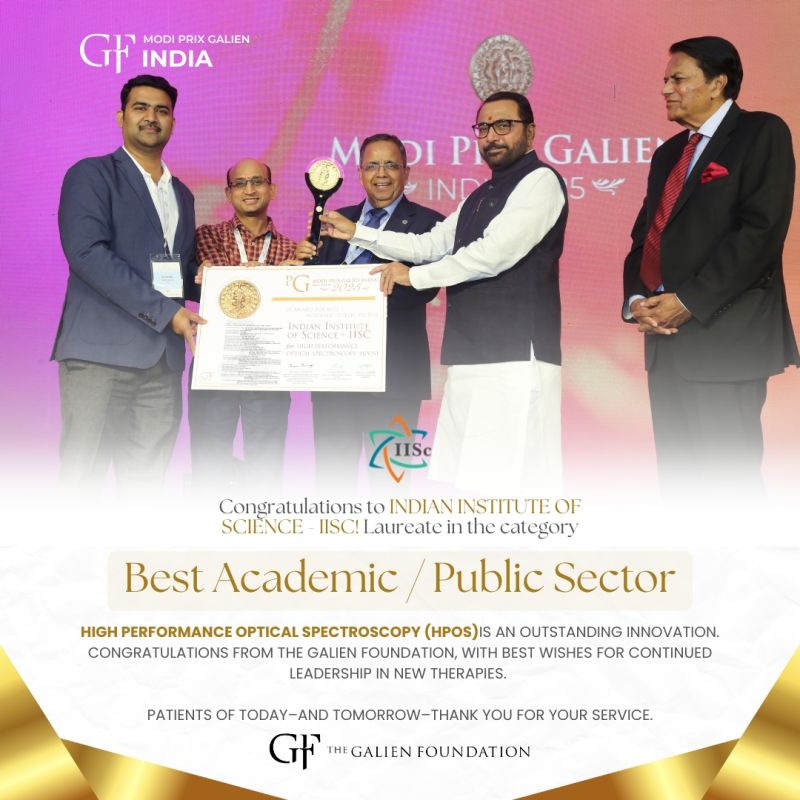
The innovation has been granted patents in India, the US, and Africa, and is now licensed to ShanMukha Innovations, a deep-tech startup incubated at SID, IISc. It is being commercially deployed under the brand names SickleFind and SickleCert. Rajesh Srinivasan, a PhD student who played a major role in its development, was awarded the “Prof UR Rao Innovation Award” in recognition of this impactful work.
A new low-cost test for sickle cell disease
Sickle Cell Disease (SCD), an inherited disorder of the red blood cells, is a major public health problem. It is characterised by repeated episodes of debilitating pain, which are a common and repeated cause of illness and hospitalisation. Other symptoms include chronic anaemia, acute chest syndrome, stroke, splenic and renal dysfunction, pain crises, and susceptibility to bacterial infections. India is estimated to be home to over 50% of the world’s patients with SCD. The disease is most prevalent in tribal communities across the central Indian belt extending from south-eastern Gujarat to south-western Odisha. Over a million people have sickle cell disease in India today. There are nearly 2,00,000 babies born with the condition every year. The sickle gene is widespread among many tribal population groups in India with prevalence of the sickle cell trait (SCT) varying from 1-40%. Hence, it is important to screen the population for SCT to lower the prevalence of SCD.
Most of the screening programmes for sickle cell disease in India use high performance liquid chromatography (HPLC) analysis, which is highly expensive and time consuming. The tests are also expensive, with each test costing between Rs 400 to Rs 700. A team at IISc, led by Prof. Sai Siva Gorthi along with his collaborator Dr. Nisanth Nambisson at Government Homeopathy medical college (GHMC) Bhopal, have developed a new low-cost diagnostic test which can detect both SCD and SCT. The test is a low-cost alternative to the HPLC test and can be deployed for screening and confirmation of the disease and trait. The absorbance spectroscopy-based test, called HPOS, uses low-cost reagents and a portable low-cost spectrometer. The absorbance spectra are analyzed using a machine learning-based algorithm for classifying the samples. The HPOS test can be performed in 15 minutes. Preliminary clinical trials of the new diagnostic tests are being carried out with the help of GHMC, Bhopal. Shanmukha Innovations Pvt. Ltd, a company incubated at SID IISc, has licensed the technology and is leading the efforts to make the diagnostic test (under the brand names of SickleFind and SickleCert) available for consumers across India. An Indian patent has been filed for the technology.